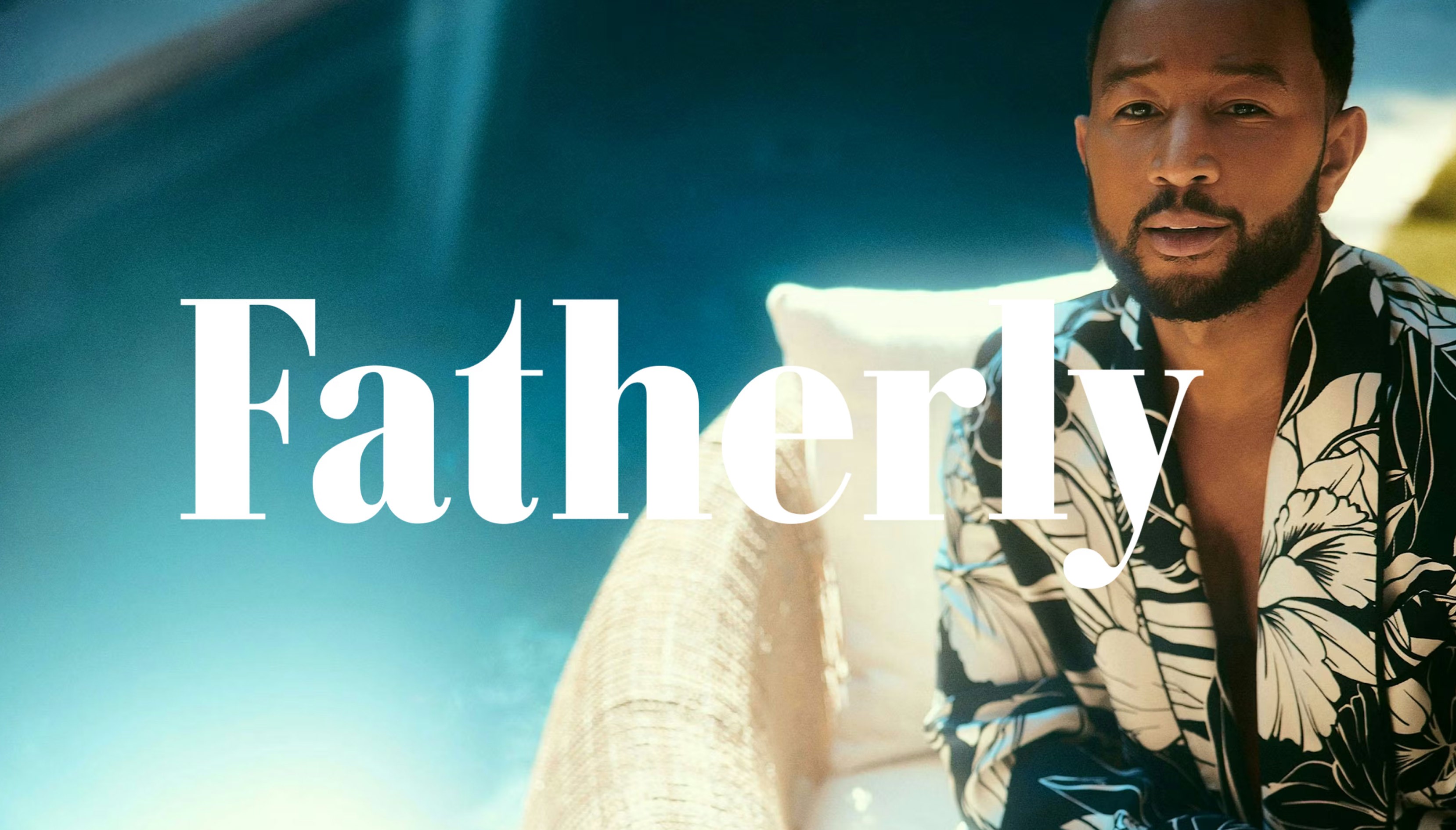
Rebuilding the house while everyone's still living in it
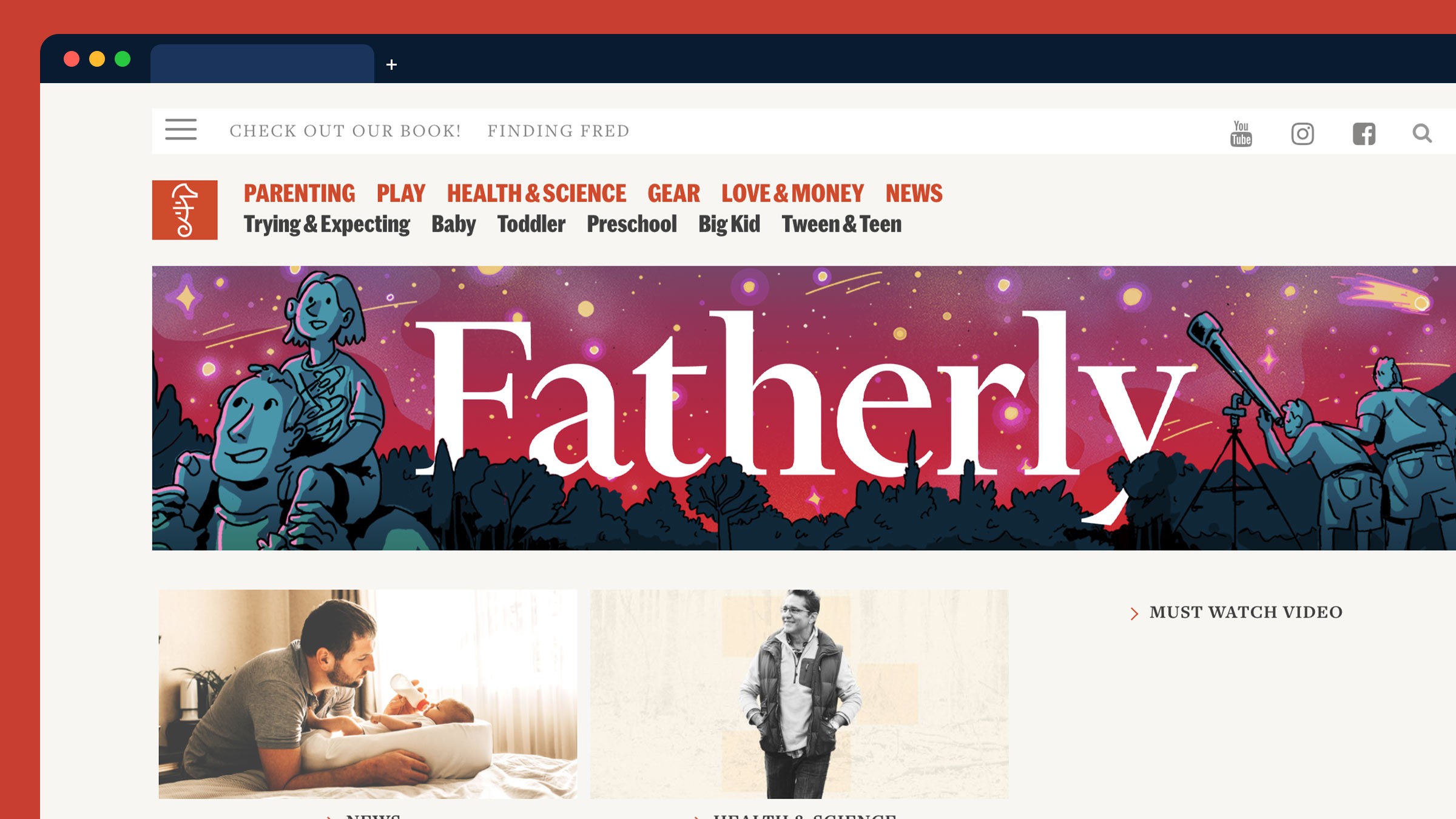
Fatherly
Lead Designer
Brand redesign, Web design, Typography, Color, Photography direction, Social assets, Editorial design
Overview
Fatherly is a leading digital media brand for modern parents, covering health, science, relationships, play, and finance, primarily for dads, though a significant portion of its audience is women. Founded in 2015 and acquired by BDG in 2021, Fatherly had built a real audience and a real identity. It just needed to grow up.
My job was to lead a full rebrand: logo, web design, typography, color system, photography and visual direction, social assets, and editorial feature design. The goal was to heighten what already existed: more intentional photography, stronger typographic hierarchy, and a site experience that actually did justice to the editorial content being produced.
The complication? The people who built the original brand were still on the team.
The Real Challenge
There's a version of this case study where I just walk you through the deliverables. Logo. Typography. Color. Grid system. Done. But that would leave out the most important part of the project, which had nothing to do with design.
The original Fatherly design team was still in the building when BDG brought me in. These were people who had built this thing from the ground up, who cared deeply about it, and who were now watching someone come in and take everything apart. That's not a comfortable situation for anyone. And honestly, it shouldn't be. So before any of the work could land, I had to earn the right to do it. That meant a lot of listening. A lot of back and forth. Bringing people along rather than presenting to them. The design had to be better, but the process had to be collaborative enough that people could actually get behind it.
We got there. But it took time, and it took trust, and that's the work you don't put in a deck.
Photography: From Illustration-First to Image-Led
Fatherly had built its visual identity largely around illustration. It worked. It gave the brand a consistent look and a lot of creative flexibility. But as the brand grew, illustration alone wasn't carrying the weight. It was starting to feel like a workaround rather than a choice.
The first thing we tackled was defining what Fatherly photography actually looked like. Not stock. Not aspirational in a way that felt out of reach. Real, imperfect, humorous, spontaneous. Dads who look like dads.
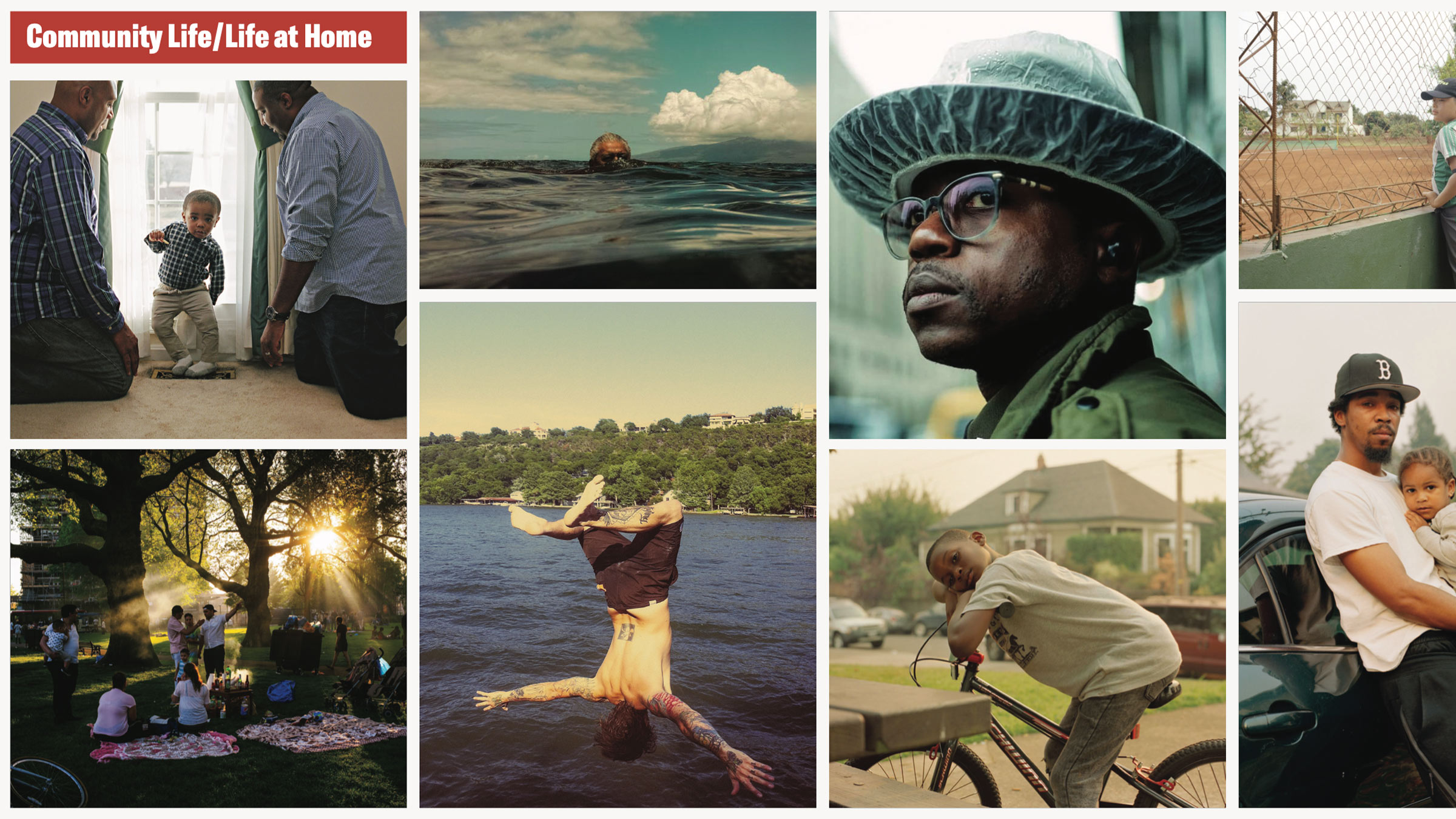
We built out a picture research framework across two key categories: Community Life/Life at Home, and Light-Hearted/Spontaneous. The distinction mattered. The first was about grounded, documentary-style moments: the quiet ones, the ones that happen in kitchens and backyards and car seats. The second was about embracing the chaos of it. Kids covered in dirt. Dads in bounce houses. The absurd everyday moments.
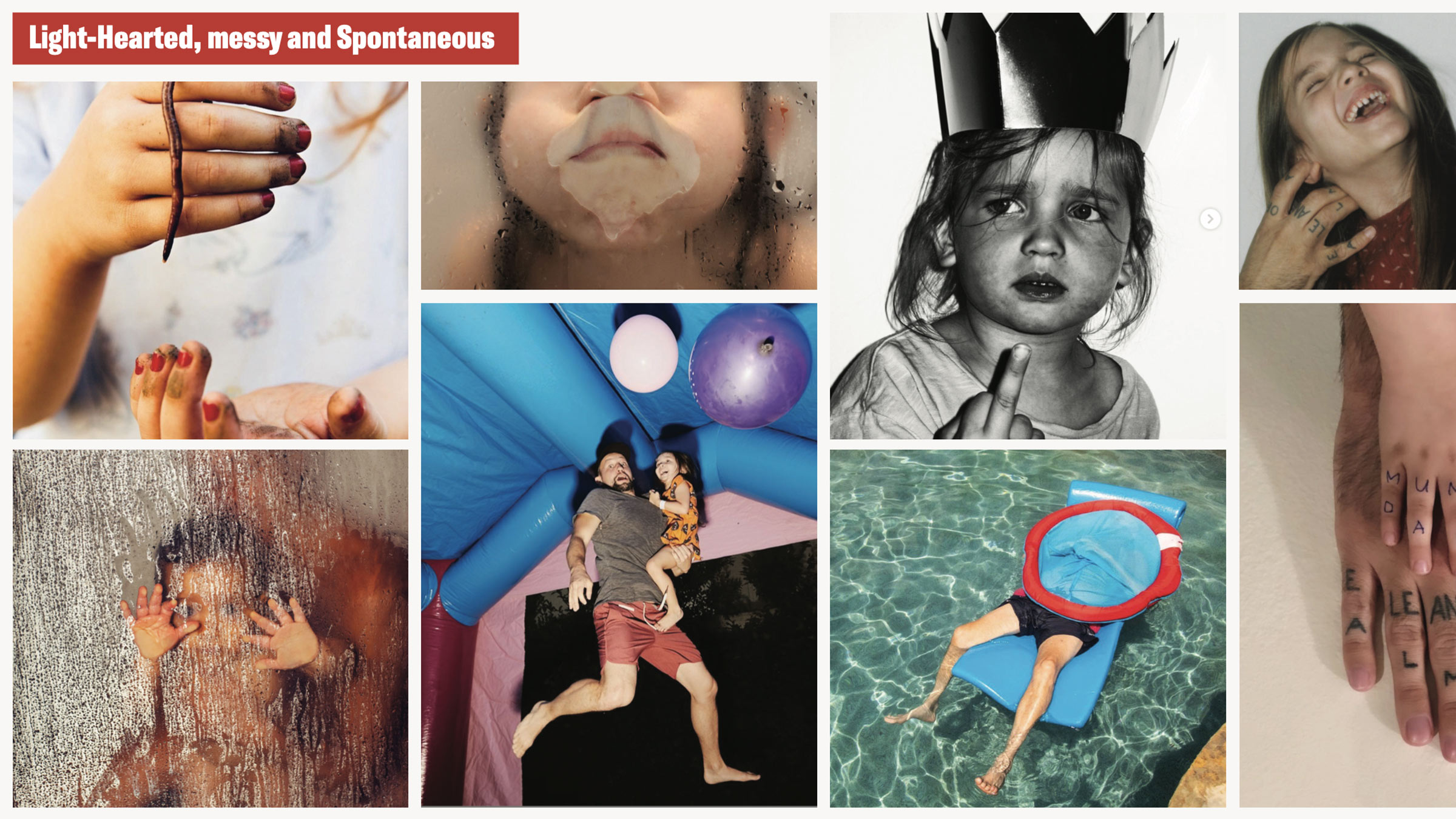
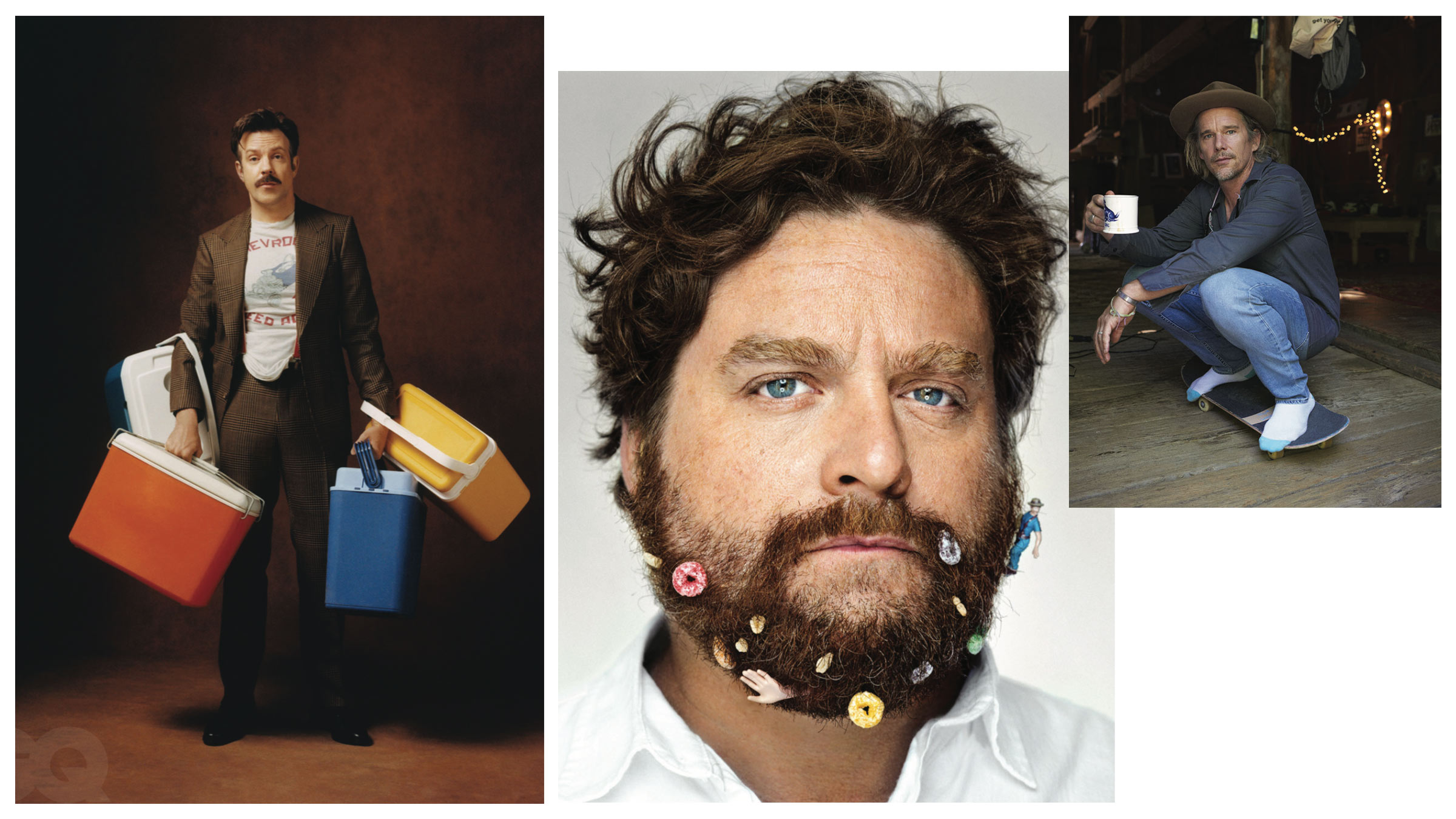
For cover shoots, we developed two distinct approaches: studio and location. Studio gave us control and the ability to push conceptually. Location gave us warmth and context. Both had to feel like Fatherly, never like they wandered in from a different publication.
The Brand: Typography, Color, Identity
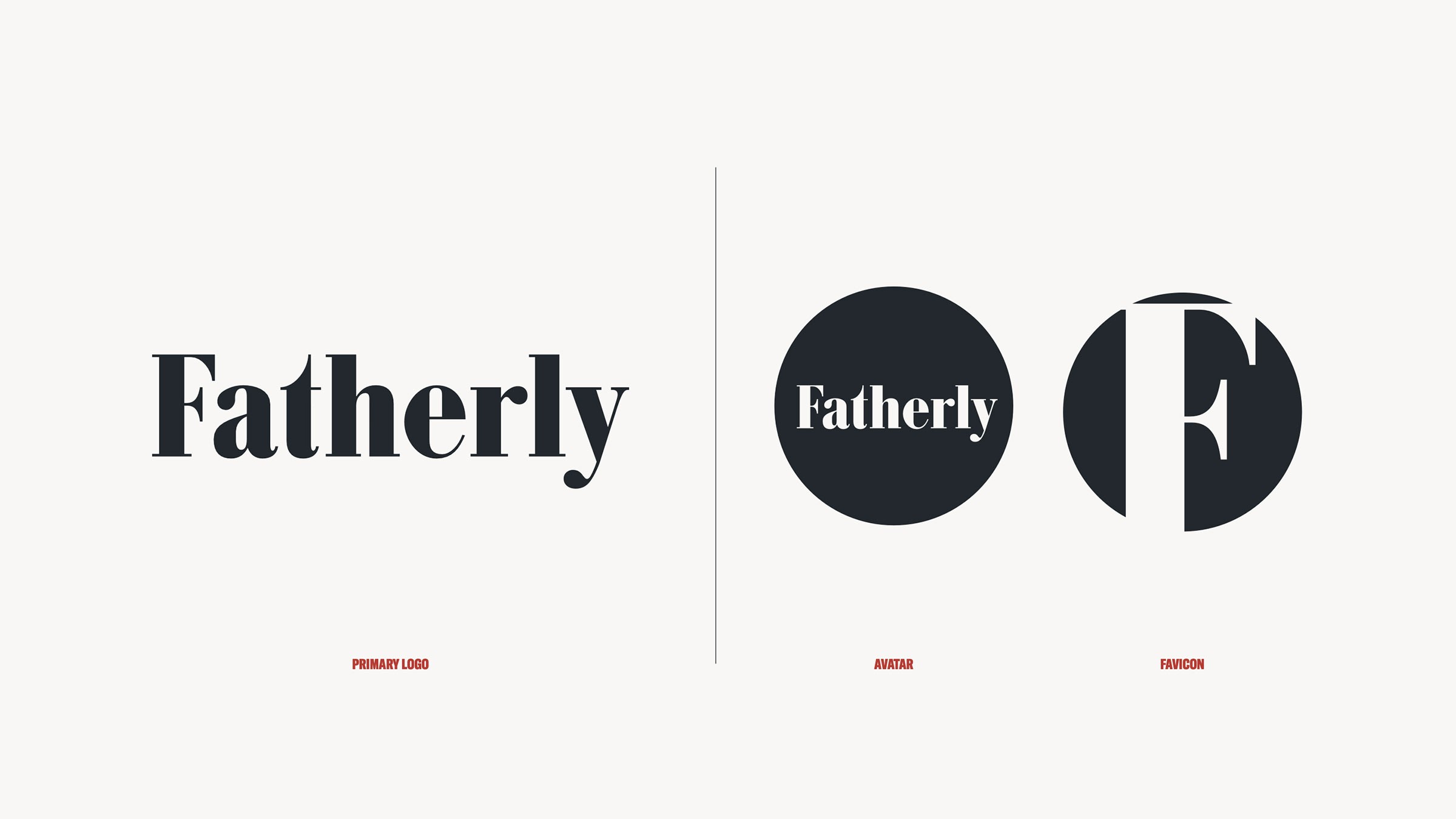
The existing Fatherly logo had energy. We weren't throwing it out. We were refining it. Making it more intentional. Building a system around it that could actually scale.
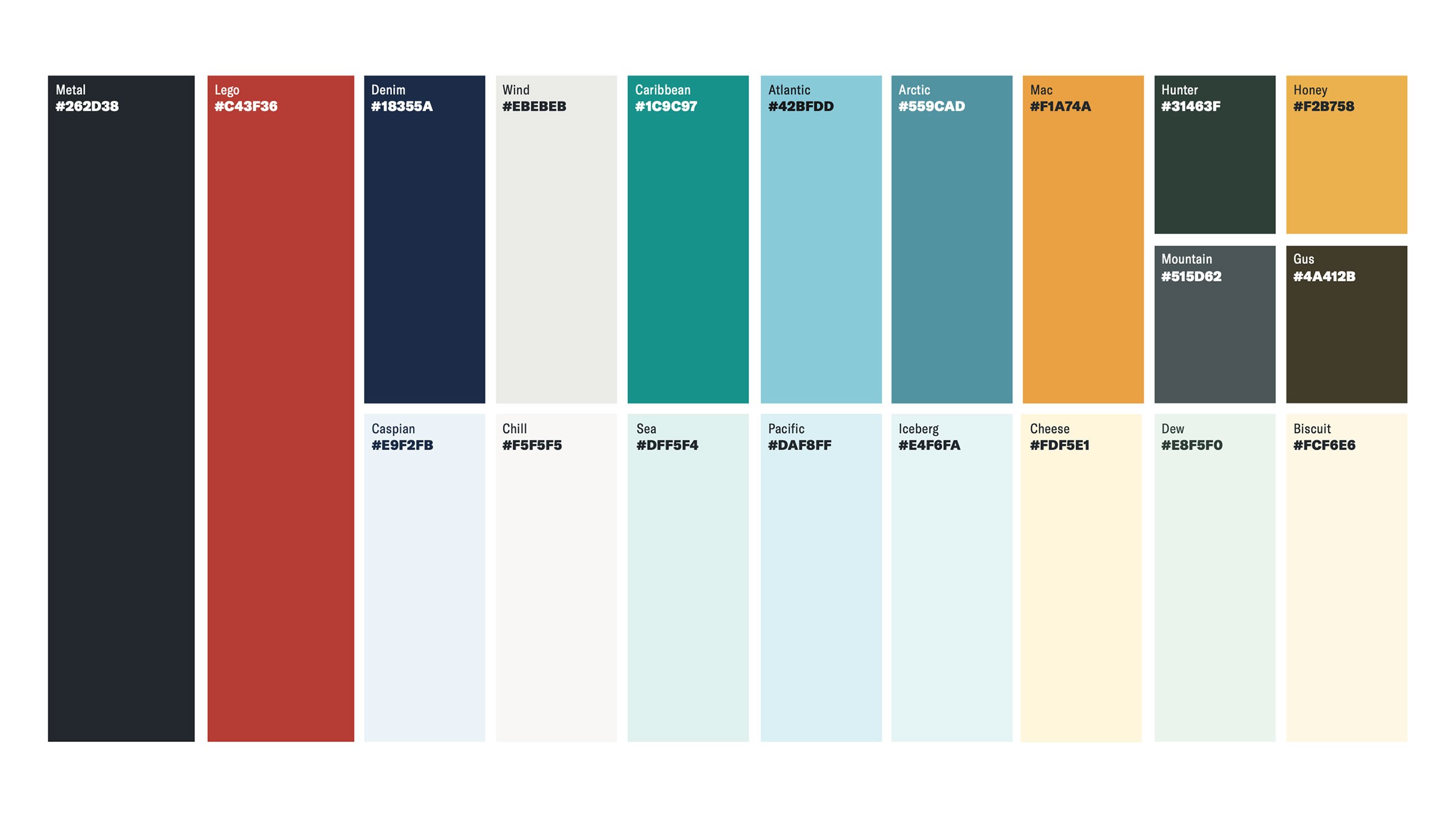
Color was where we got to have some fun. Rather than leaning on the obvious dad-brand palette, we built something with more dimension. The system runs from Metal, Lego, and Denim at the darker end to Caribbean, Atlantic, and Arctic in the mids, all the way to the softer tints: Dew, Caspian, Pacific, Iceberg. Named, intentional, specific enough that anyone on the team could make decisions without asking. That kind of clarity matters at a publishing operation where the design team isn't the only one touching assets.
Typography became the backbone of the new system. We landed on a three-level hierarchy: Frank Ruhl Libre Black for the primary headline, a typeface with real editorial weight. GT America Compressed Black and GT America Condensed Bold handled the secondary headline work and eyebrow labels, giving us range from bold feature moments to the more utility-driven UI copy.
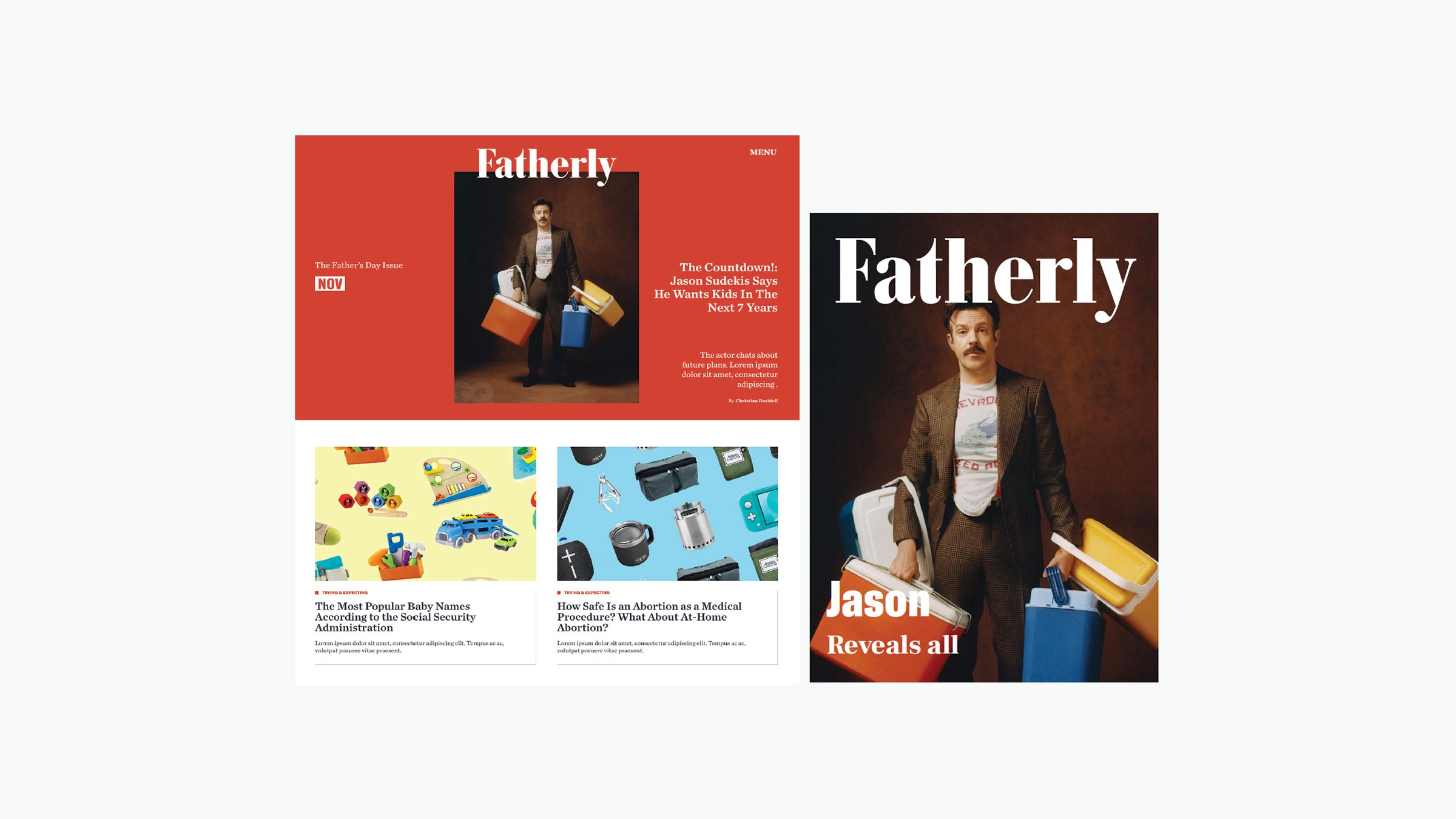
Web Design: Making the Editorial Work Harder
The site redesign was about one thing: the content deserved better. Fatherly publishes genuinely good journalism (health, science, parenting, relationships) and the layout wasn't surfacing it the way it should.
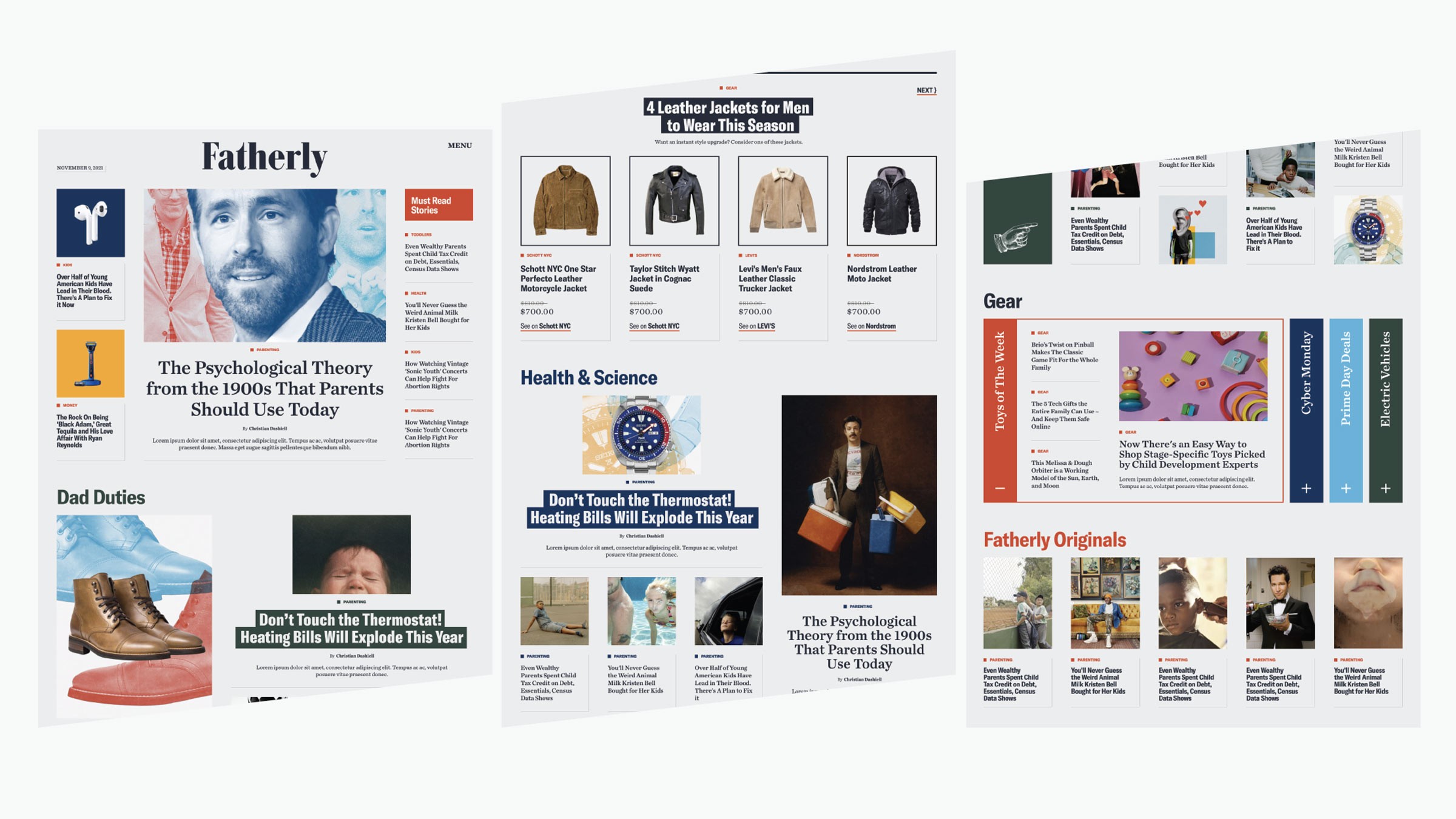
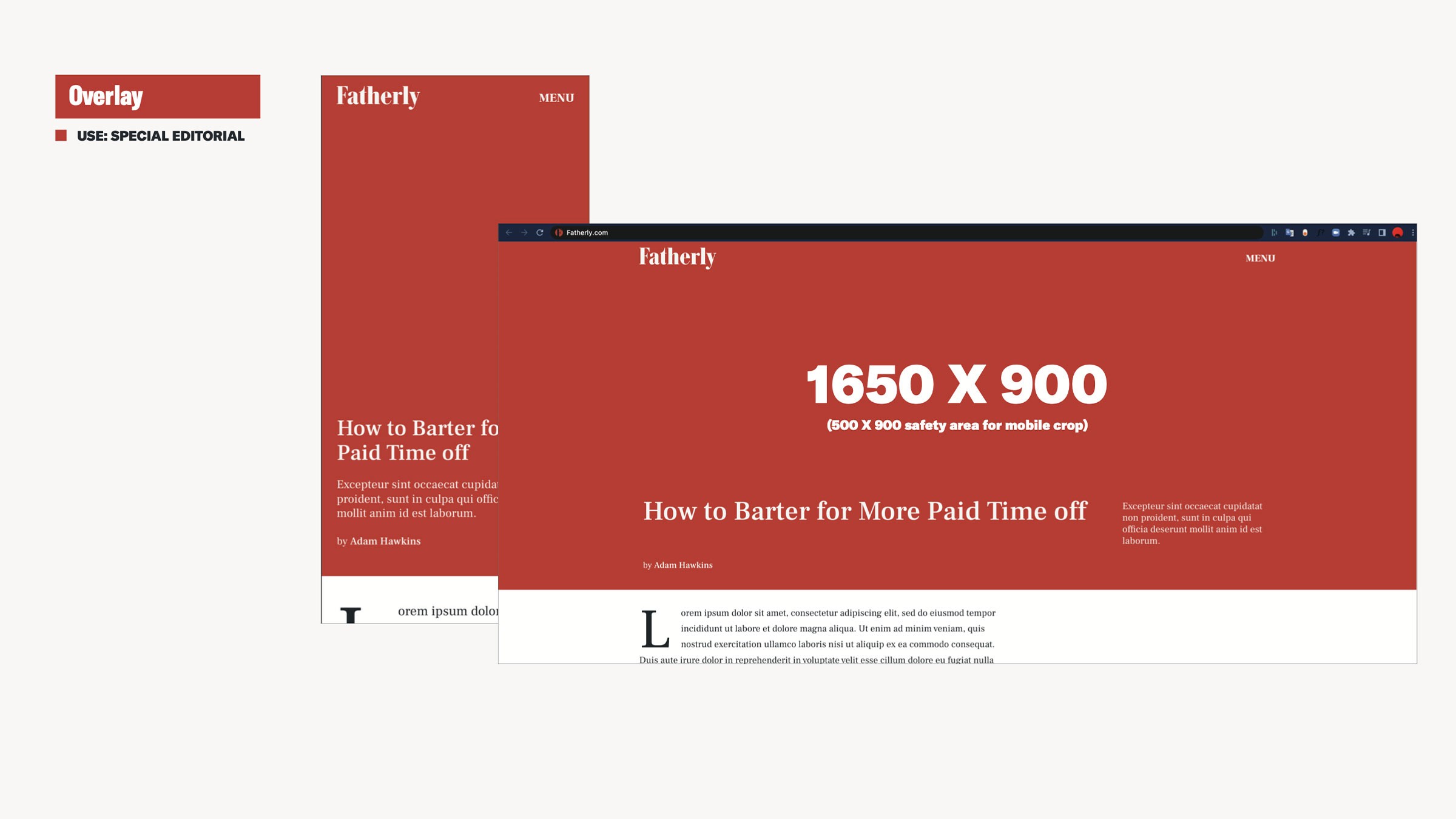
We rebuilt the homepage with a clearer hierarchy. Strong featured moments for cover stories. Organized sections for editorial verticals. A design system flexible enough to handle the range of content types, from quick gear roundups to long-form features, without everything looking the same.
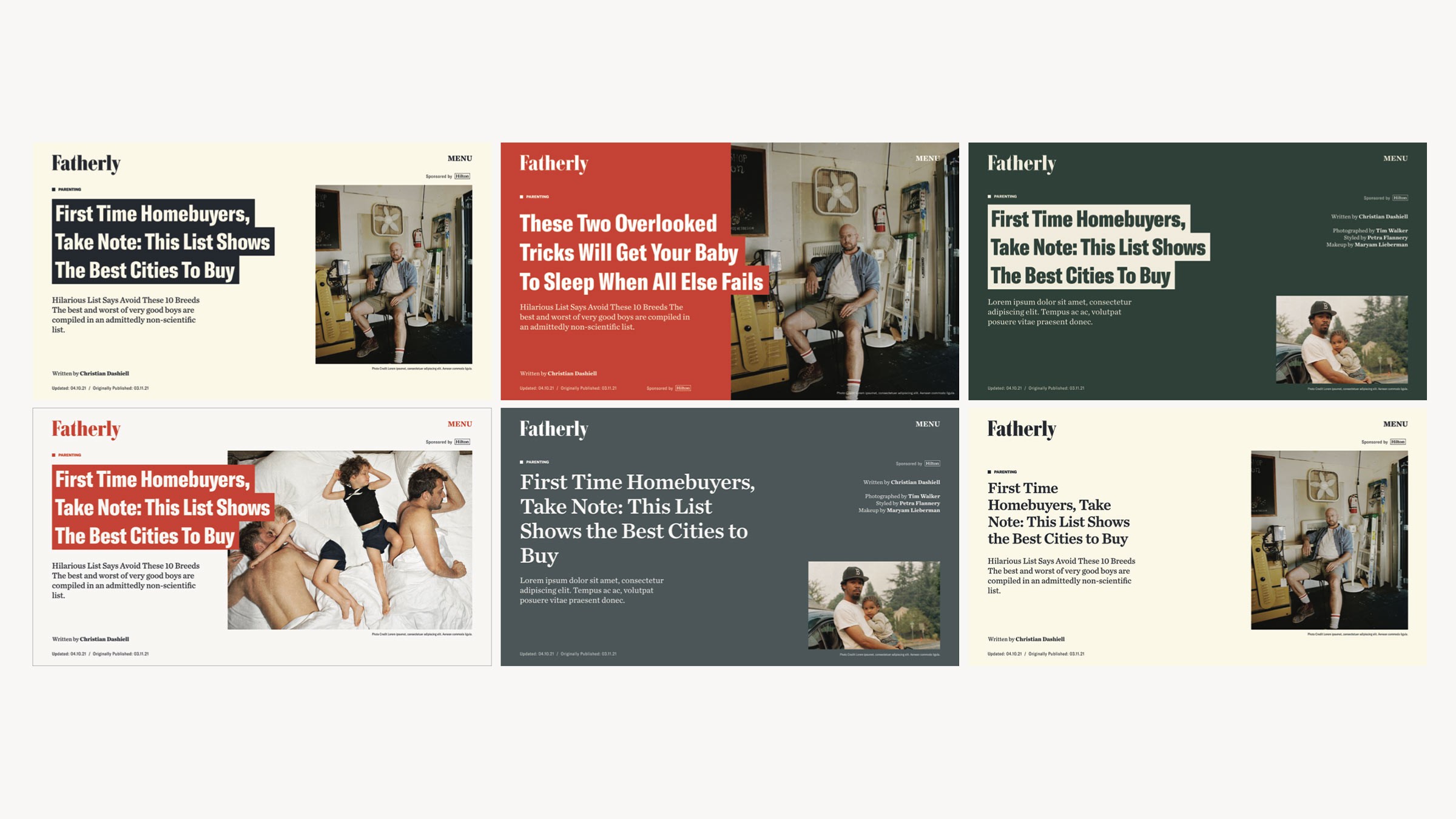
Headline card variants gave editors real options without creating chaos. Each version had a purpose: some led with photography, some leaned on typography and color blocks, some were built for sponsored content. The system had rules, but it wasn't rigid.
The on-site image variant system was one of the more methodical pieces: establishing specific dimensions and crop considerations for every content type. Each format designed around how the content actually lives on the page and crops on mobile. It sounds granular. It is. It's also what makes a site feel considered versus cobbled together.
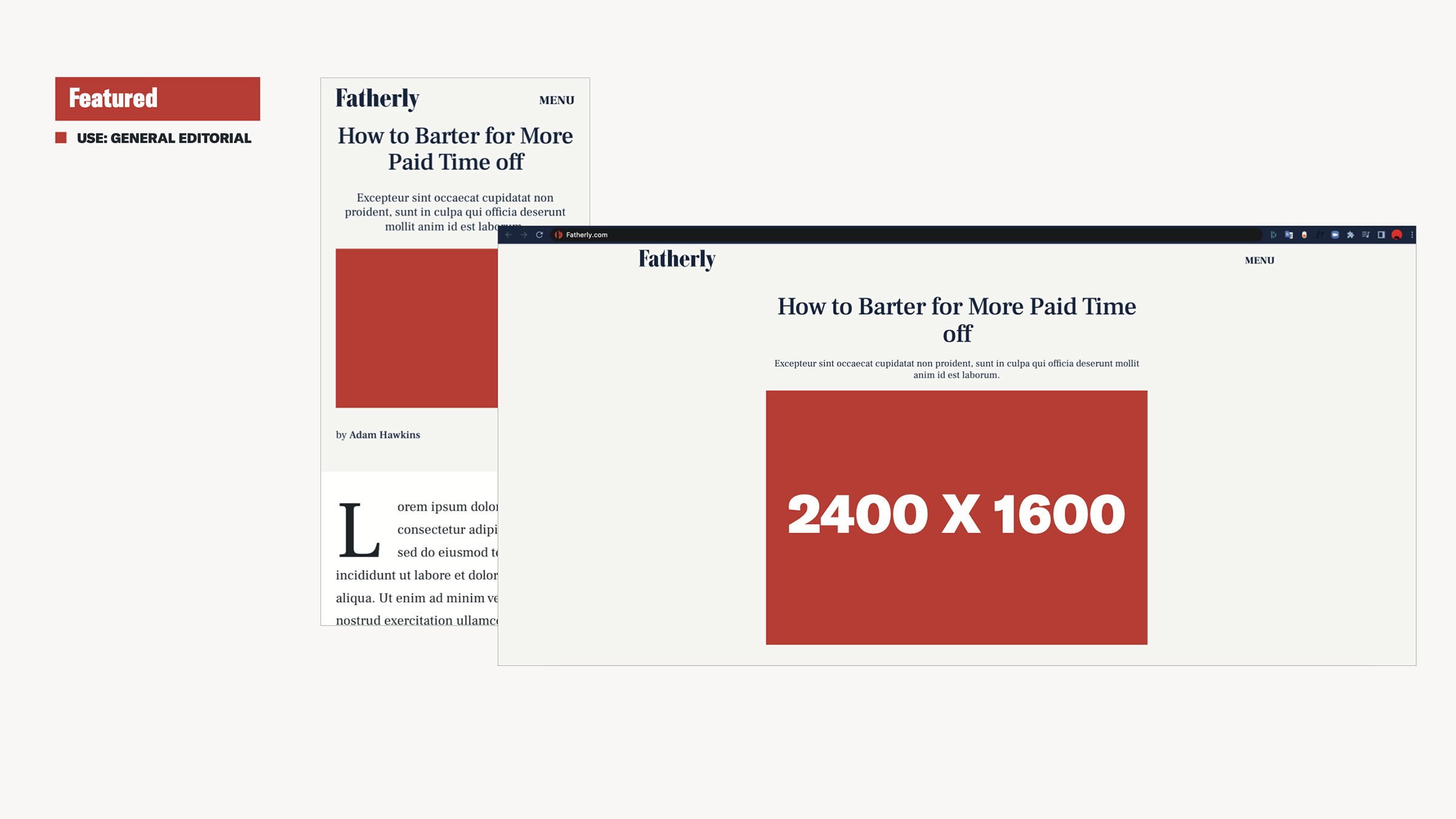
Keeping What Worked, Sharpening It
We kept illustration. We just gave it more structure.
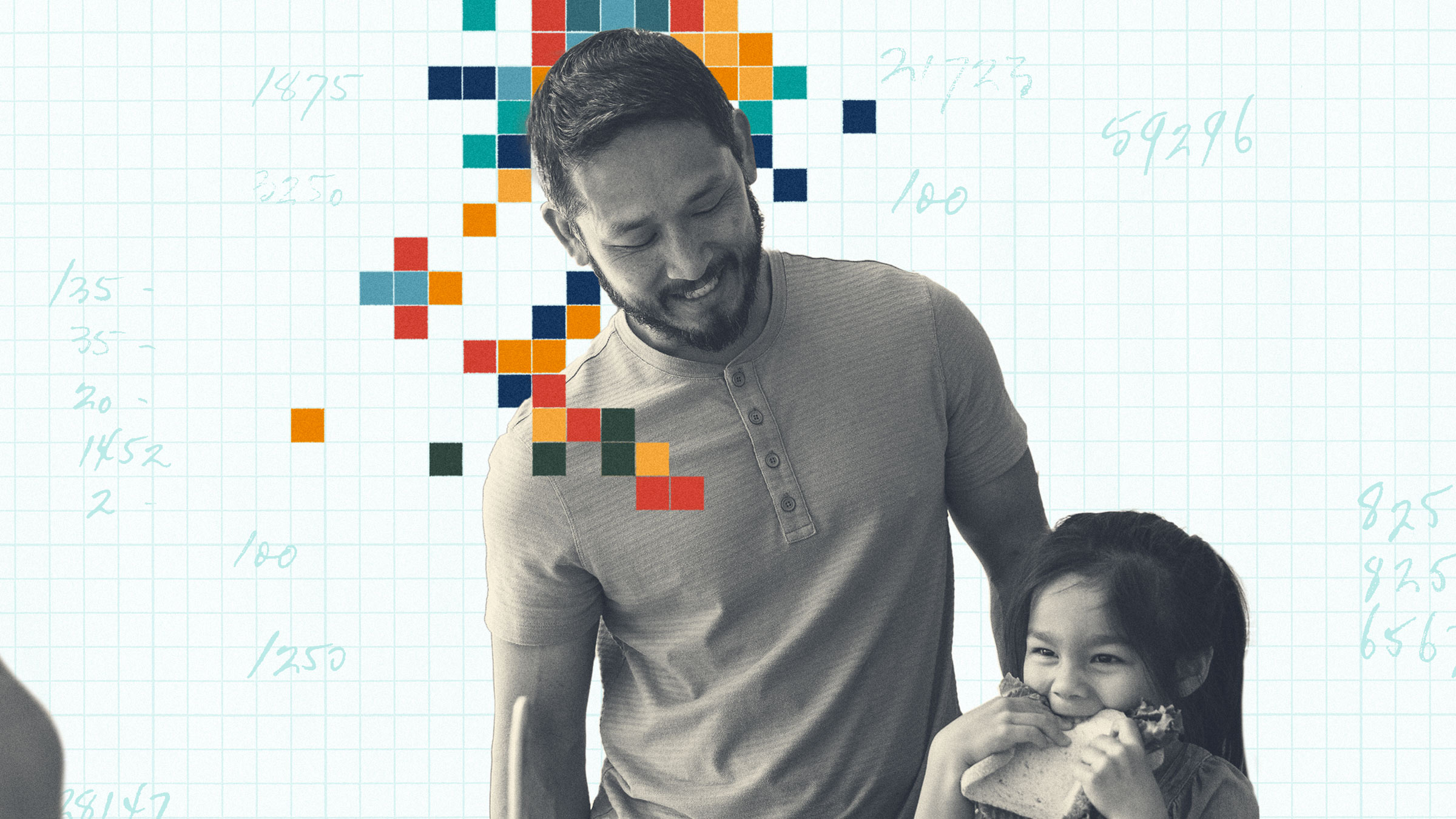
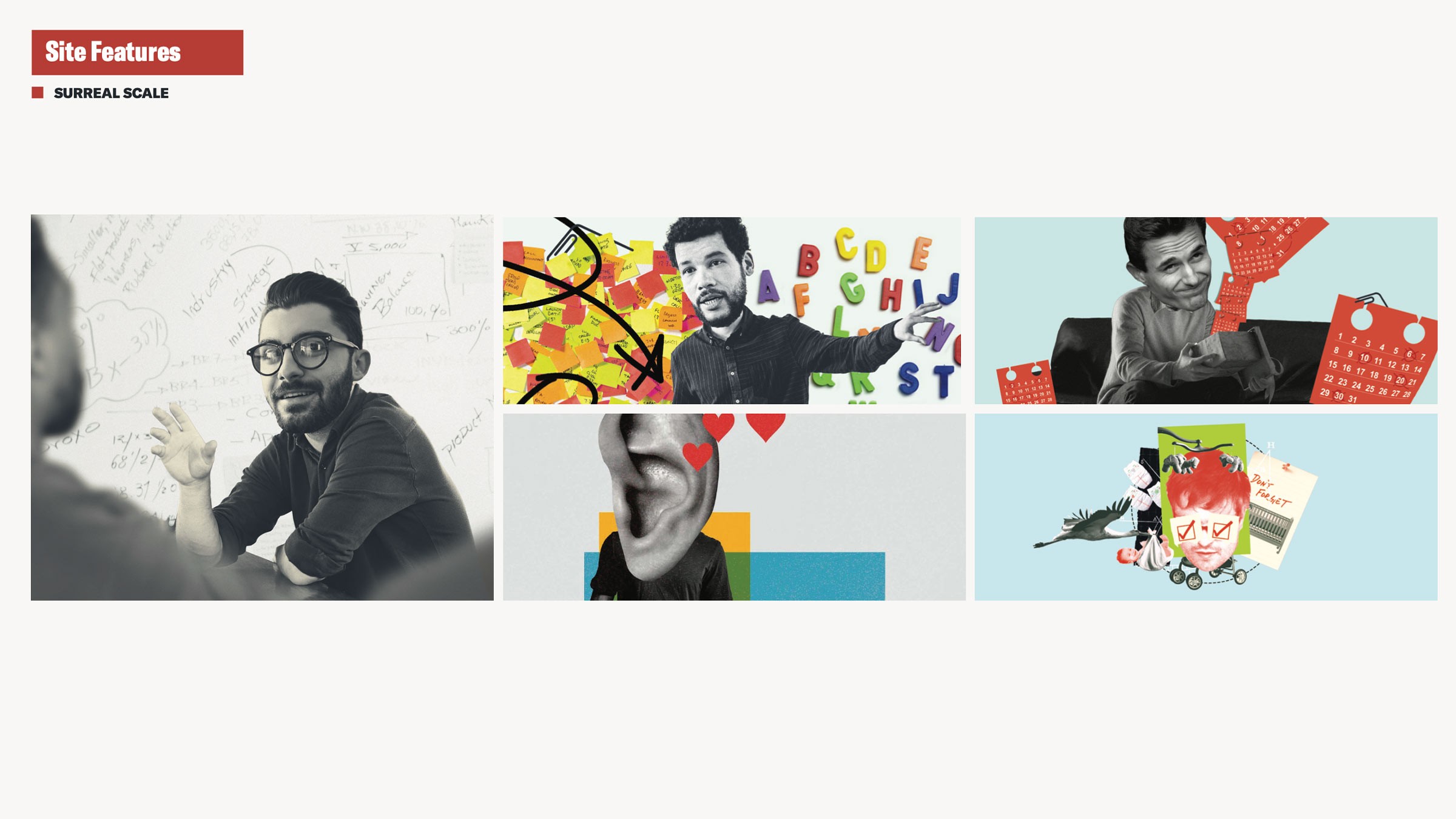
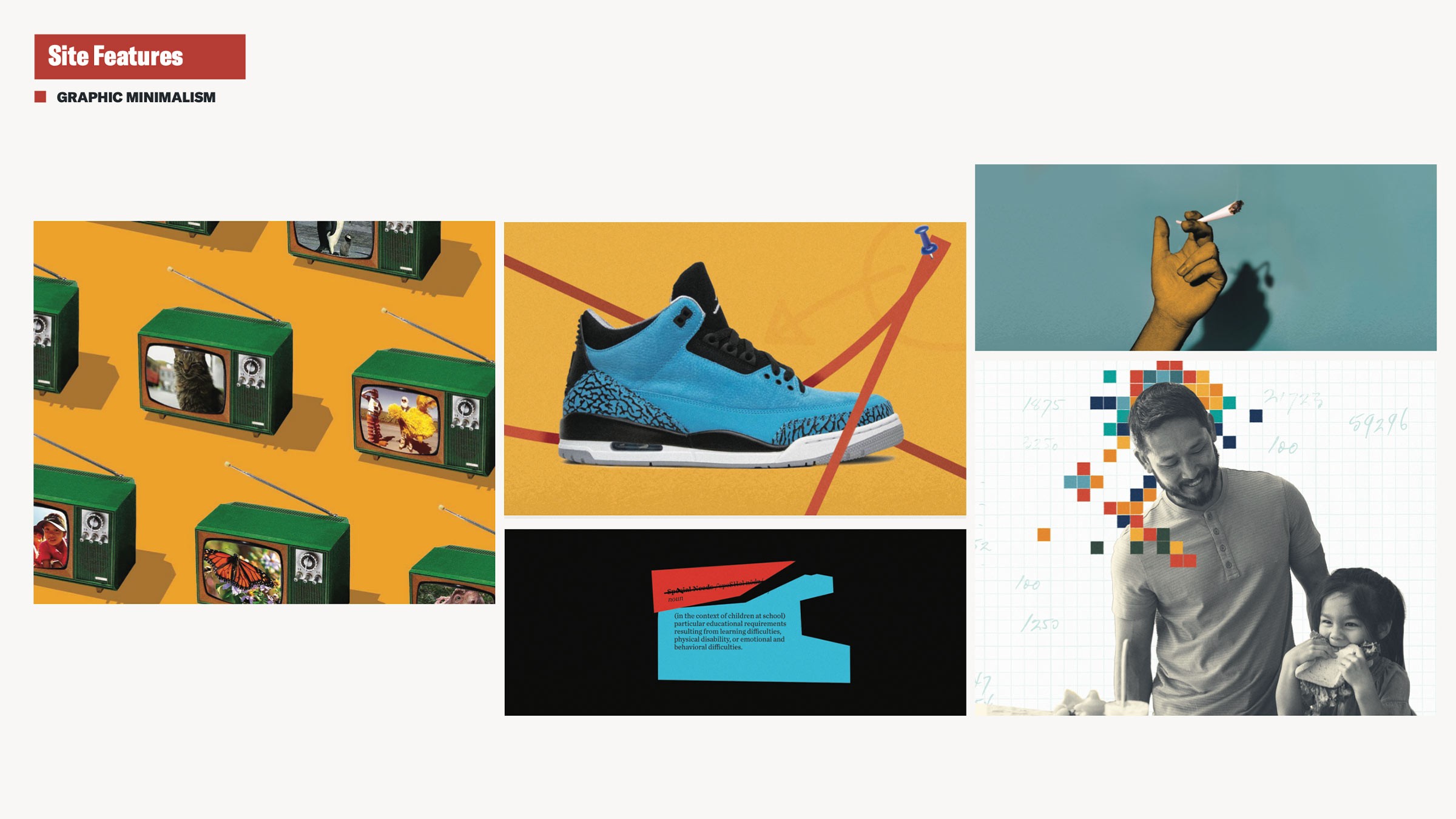
The existing approach was loose. What we built was a defined taxonomy of styles, each with a specific editorial purpose: Photo Surrealism for conceptual, mind-bending story art. Surreal Scale for collage-driven pieces where the juxtaposition is the idea. Layered Photography for celebrity features, creating a dynamic, multi-exposure effect. Graphic Minimalism for cleaner, more restrained pieces where the image serves the text.
Applied across the site (feature stories, gear sections, celebrity profiles, fitness content) the system gave editors and art directors a shared language. You could brief an illustrator or a photo editor using the same vocabulary. That consistency is what makes a brand feel coherent at scale.
Our social presence
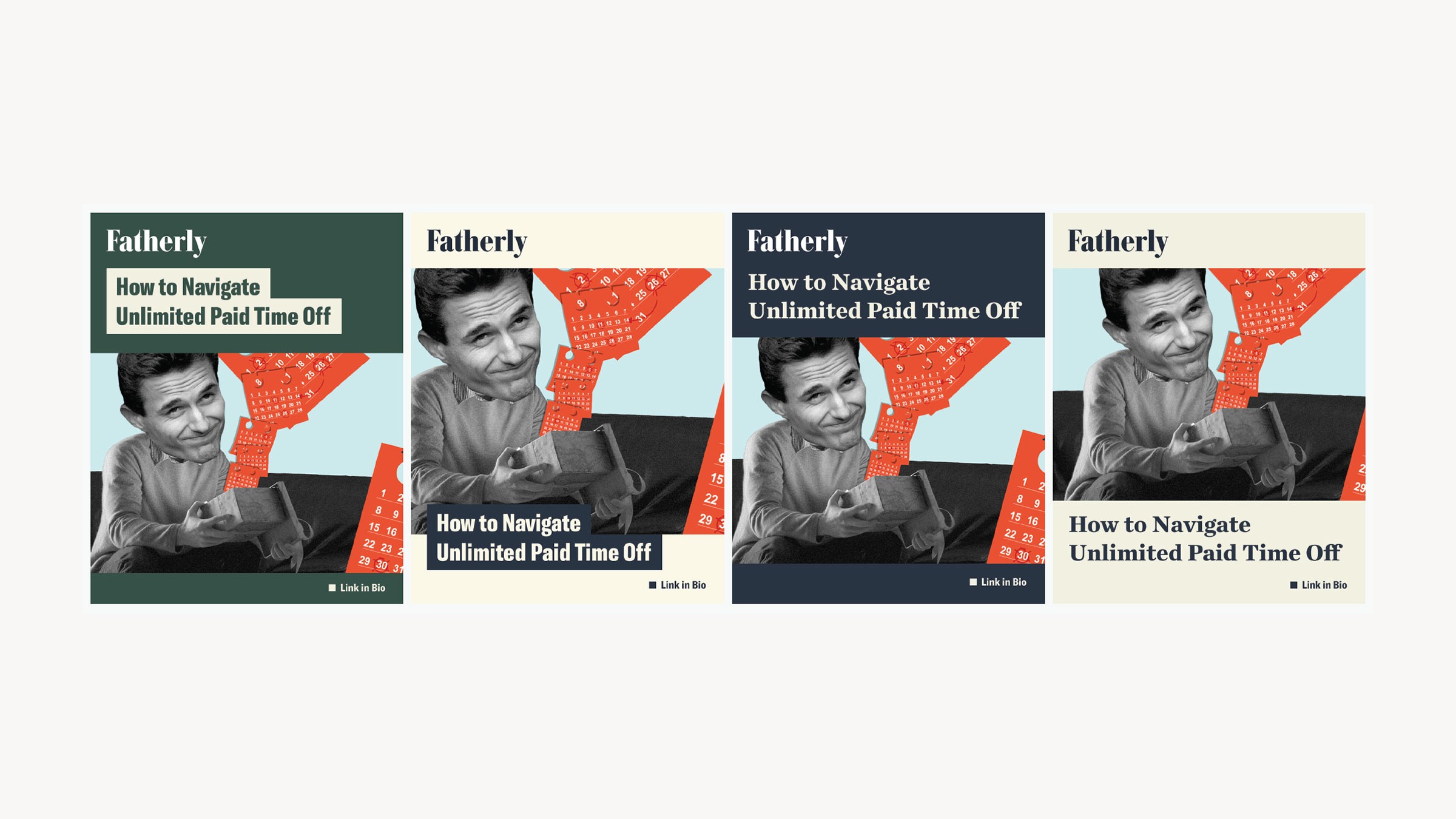
Social assets are where brand systems either hold together or fall apart. We built quote cards and cover-style story promotions across five color variants, keeping the visual system consistent without being rigid.
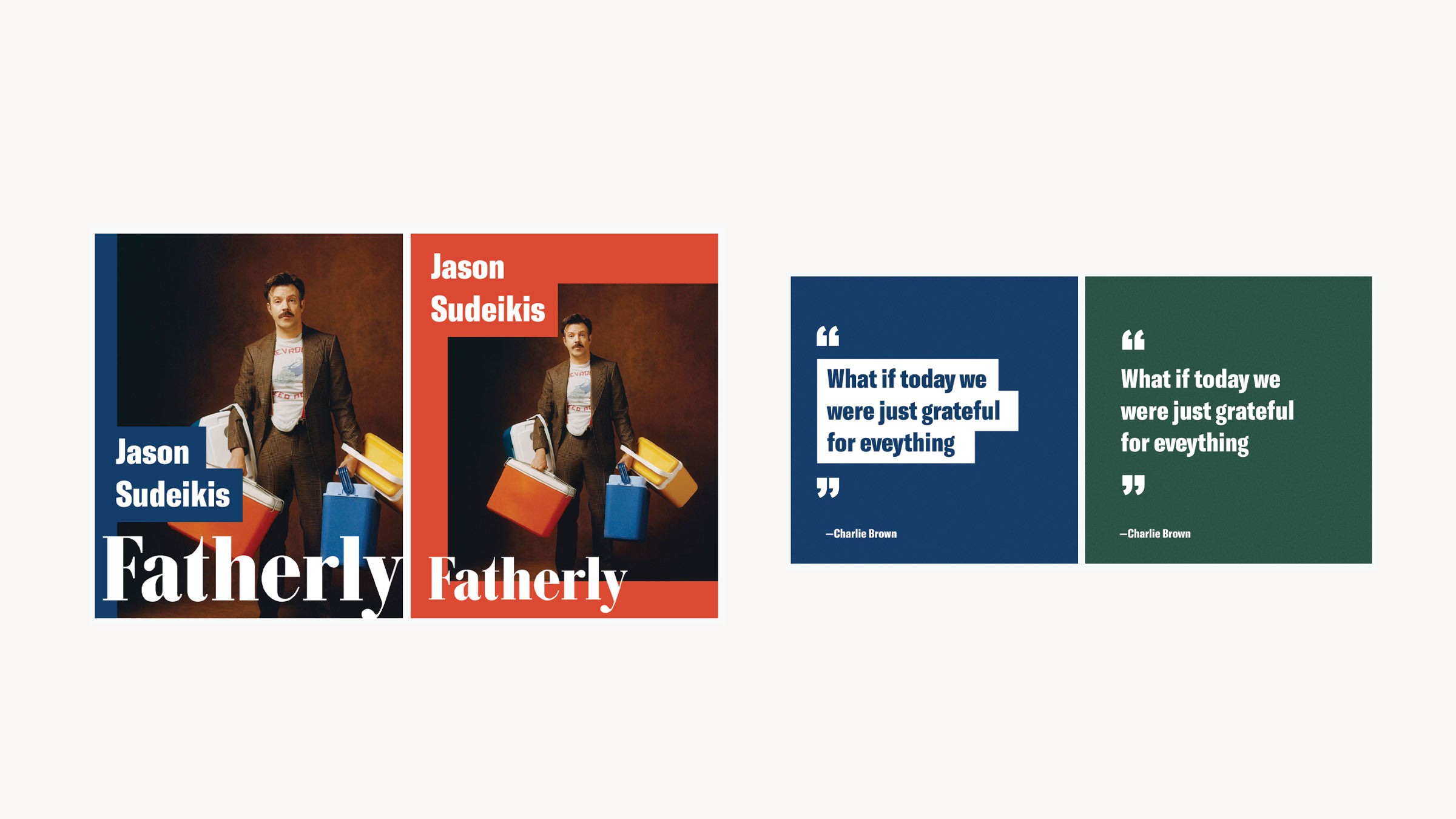
Article promo assets without photography got their own treatment: collage-style illustration work that kept the visual interest high even when there wasn't a strong image to pull from. These weren't afterthoughts. They were built with the same care as the editorial design because for a lot of readers, social is the first (and sometimes only) touchpoint.
Results
The rebrand helped take Fatherly to new audience heights under BDG. The editor-in-chief attributed the growth to a combination of stronger editorial focus, SEO, social strategy, and a brand that finally looked the part. The expanded brand system supported numerous extensions beyond the core site.
The work also proved something that matters to me on any rebrand: you can honor what came before while still pushing it significantly forward. The original team built something great. Our job was to take it further, and eventually, they could see that too.
That last part might be the result I'm most proud of.